After a series of self-selected dolphin kicks following a racing start, an initial evaluation of the techniques used by this world class swimmer revealed two key areas for performance optimization.
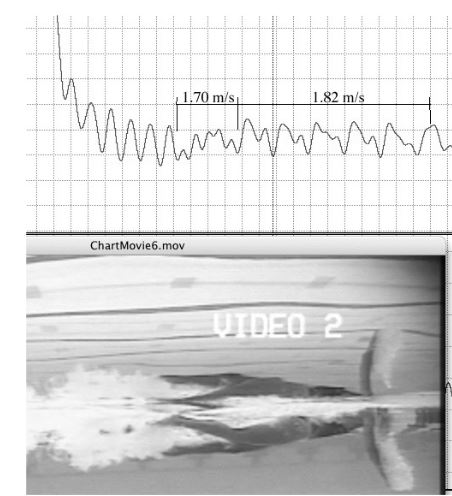
Telemetry data showed that the swimmer was taking too many dolphin kicks, and the extra kicks occurred at speeds below the regular swimming pace. Additionally, because the swimmer initiated the breakout phase at this reduced velocity, the average speed during breakout phase was 1.70 m/s. As can be seen from the telemetry, that is well below the regular swimming speed of 1.82 m/s. The synchronized video further revealed that it took two full strokes during this phase just to regain normal speed. This slower breakout not only increases overall lap time, but also requires the swimmer to expend extra energy accelerating back to race pace.
Once these findings were presented to the coach and swimmer, we discussed practical adjustments. It was agreed that limiting the underwater phase to three dolphin kicks would provide the optimal breakout timing and the best opportunity to enhance performance.
Shortly after the session, this swimmer established a new world record.
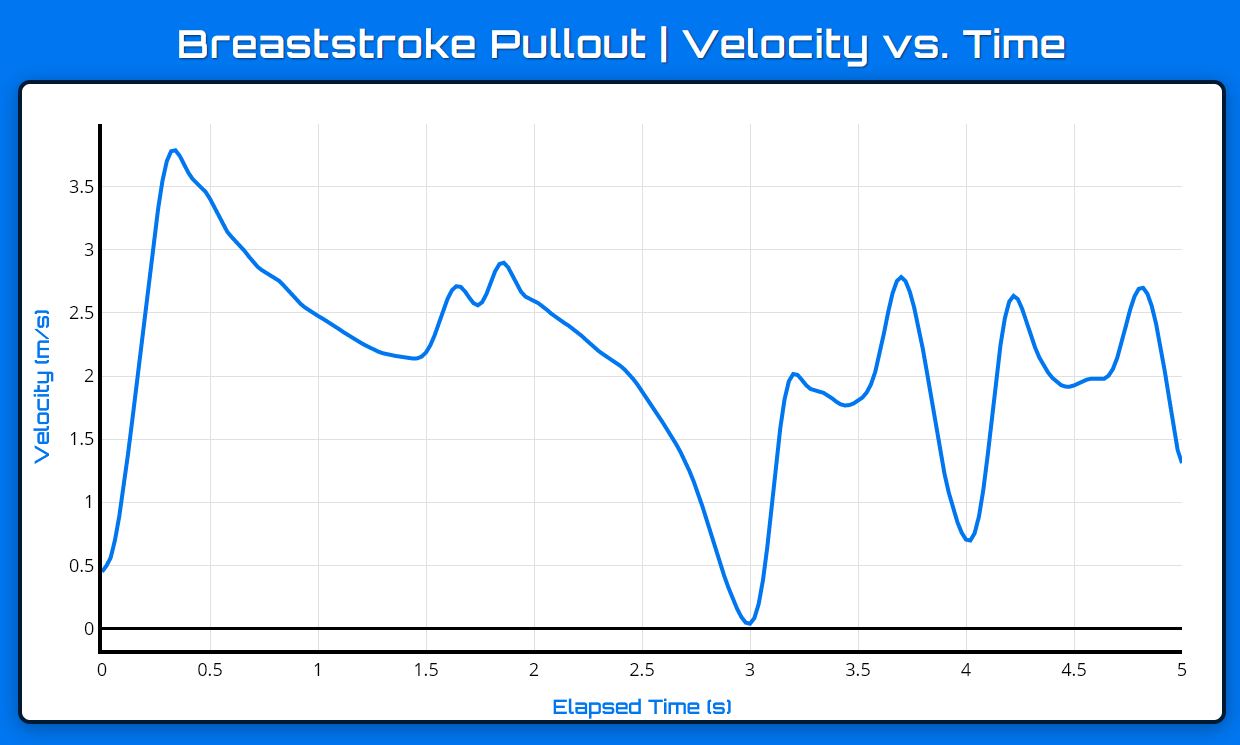
We were the first in swimming to demonstrate that even world-class swimmers
like the one in this video, experience a zero-velocity phase during the recovery
portion of the underwater pullout. In addition, from the instant the feet lose
contact with the wall, velocity declines continuously throughout the pull,
kick, and glide phases of this technique. A significant portion of this
underwater pullout phase occurs well below the swimmer’s normal race velocity,
making it essential to transition to regular swimming as quickly as possible.
When the glide and recovery phases are too long in duration, it can take
two to three strokes to regain normal swimming speed. This not only
slows lap times, but also increases the energy required to return to
race velocity. (Click on the graph for full-screen interactive mode.)
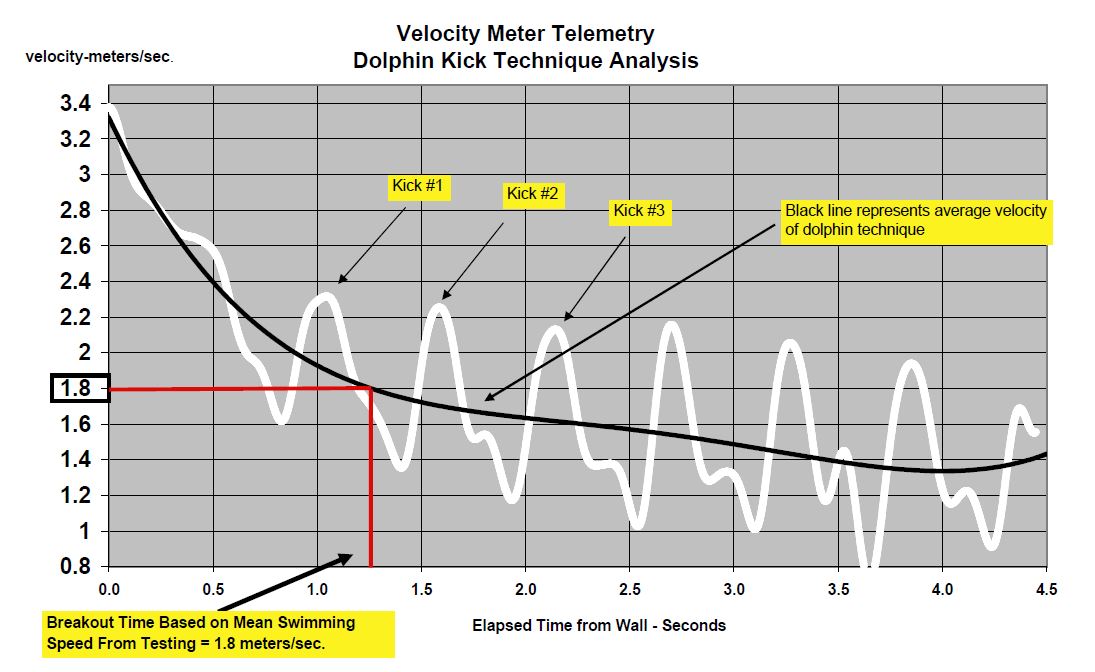
Using Velocity Meter/Video telemetry, we can precisely identify the moment when underwater dolphin kick speed drops to meet regular clean swimming speed thus optimizing the technique..
In this example, the black line indicates the average speed over time. We have numerous examples where swimmers remain underwater kicking longer than is productive. Surfacing below clean swimming speed also forces the athlete to expend additional energy to accelerate back to race pace speed, that could otherwise be conserved or used later in the race. In addition, we have also found that it can take up to two full strokes, before a swimmer regains clean swimming speed after the breakout.
Push-off Glide Phase | Velocity Decline
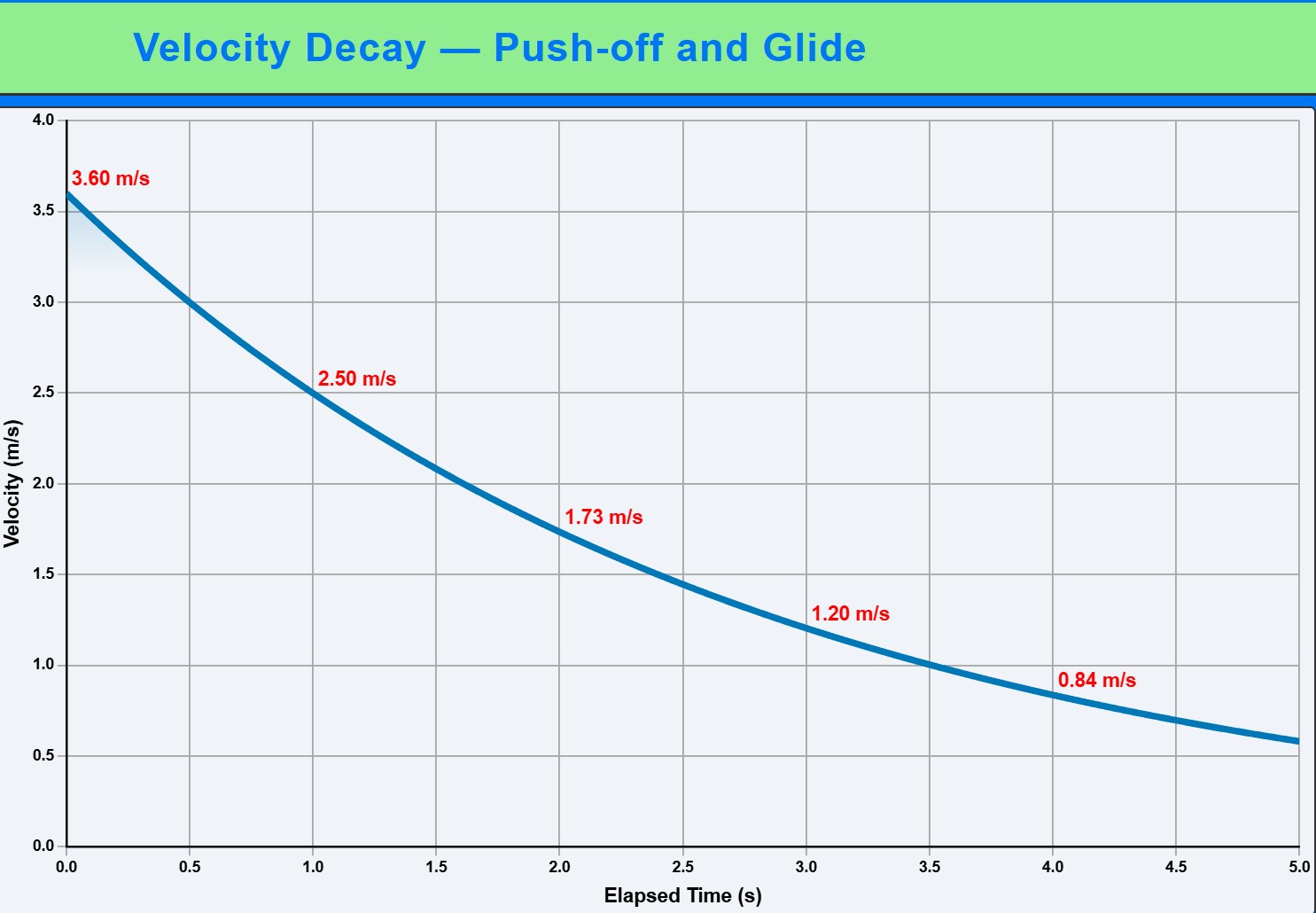
As seen in the video, the moment the feet lose contact with the wall, velocity drops instantly due to the drag forces of the water. Being able to define the gliding technique without guessing is essential in improving lap times. This telemetry can also be exported into a fully interactive visualization that identifies the exact duration of the glide phase before reaching clean swimming speed—eliminating any guesswork. (Click on the graph for full-screen interactive mode.)